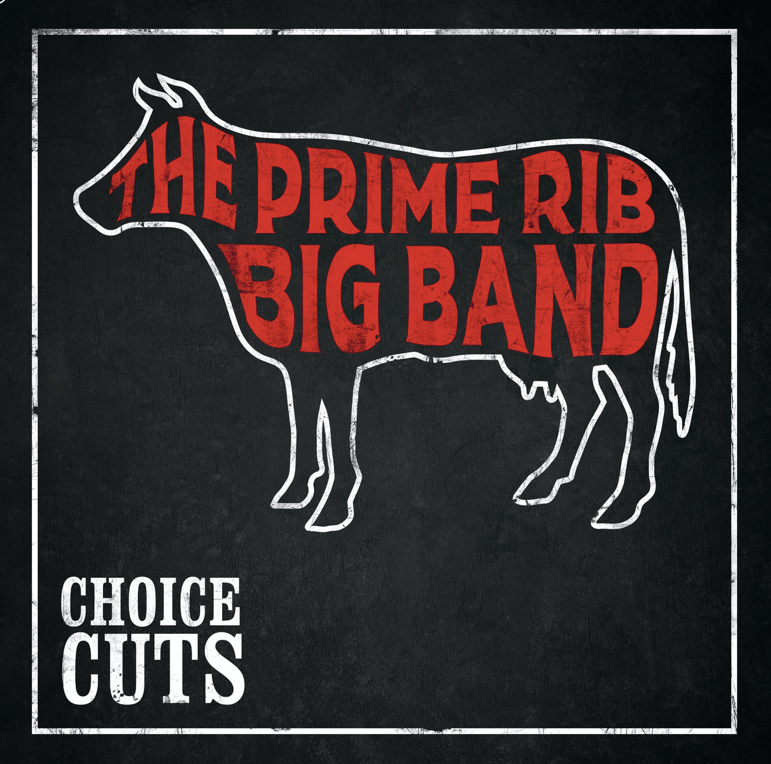
While my first “permanent” baritone saxophone experiences were in R’n’B or Soul horn sections, I feel that being a baritone saxophonist in a big band. When Ed Lister formed the Prime Rib Big Band in March 2017, I was called for the bari sax (and clarinet, and eventually bass clarinet) chair.

After three years of anchoring the saxophone section, I’ve learned a few things about sitting on the lowest woodwind book. Here are three important lessons that I’ve learned about playing the bari sax in this situation.
The Bari Sax Chair Is The Best

I love variety! The bari sax chair in a big band has so much variety – sometimes you live in the sax section, other times, the trombone section. You get to hook up with the bass on great baselines, and anchoring the whole band on shout sections is an amazing feeling! Also, the number of times I get to play in the holes between the rest of the band is what I live for on big band gigs.

Typically, There Are Less Solos

I am fortunate to play in the Prime Rib Big Band, where there is lots of room for every player to play solos, but that isn’t always the case in other big bands. Growing up as a tenor player who played solos in big bands, it was an adjustment to sit at the other end of the section and wait for the blues – something I love to blow on! After a few gigs, I started to discover the beauty in and understand the role.

I Needed To Change My Gear

Playing in a big band demanded more of my sound – fitting in with saxophones, then trombones, and the bass forced me to think about the overall flexibility of my sound and mouthpiece setup. I also went through a couple of horns to figure out what I needed and liked, but that’s a different story.

I found that my setup was too resistant for what I needed. I started by playing a smaller tipped mouthpieces with a hard reed (Otto Link Super Tone Master 6 with a D’Addario Royal 5 or Select Jazz 4H), and didn’t think that I had enough cut. I tried huge mouthpieces – a Lebayle Jazz 8* which measured .138 and a Rico 2 or 2.5. Eventually, I found some mouthpieces in the middle (.115ish with a 3 or 3.5) that gave me the best of all worlds – clean articulation, solid tuning, the volume, and most importantly, the sound I wanted. Finding gear that fit me and my needs allows me to get the most out of my horn every time I sit in a big band.

Do you enjoy sitting in a big band?

If so, what are some of the things that you’ve learned through your experience in large ensembles?

13 responses to “Three Things I Have Learned From Playing Bari Sax In A Big Band”

  1. I think the baritone is my favourite, but I have found it limiting as a soloist in a big band, depending on the band. I think Nick Brignola may have influenced me TOO much in that regard. I think if I had unlimited resources, I would front a big band like Mulligan did, but playing all the saxes, and still providing plenty of solo space to every band member who wanted it, while tailoring the choice of soloist to the chart in question (like Duke did). I agree with and love everything you say, but I don’t like playing on a stand, yet it’s getting harder to have a baritone on my back for hours at a time.

    Like

    1. Nick Brignola’s influence as a soloist is hard to ignore! I would love to have a baritone-fronted big band with the same goals. I have never been able to play off of a stand comfortably – I did a recording off of one because of the fast switch to bass clarinet, but that’s it.

      Like

    2. I’d love a bari with a peg. It would need to be long enough (I’m tall), but I’d love to be able to balance the bari like my bass clarinet.

      Like

      1. Check out the SaxSupport from Down Under!

        Like

      2. I will! Thanks for the tip!

        Like

  2. In the big band I play in I get the best of all possible worlds — anchoring the section, blending with the trombones, adding flute and bass clarinet AND doing some arranging. No complaints here.

    Like

    1. The best of all of the worlds!

      Like

  3. Speaking as an arranger, I think it’s one of the most important chairs in a band!

    Like

    1. I agree! I always manage to add a little “feature” spot for the bari in all of my arrangements. Haha!

      Like

  4. I play Bari in a community BigBand (which is part of a community Symphonic Band, where I also play Bari). My horn is a Conn 12M, 1954 vintage. We play mostly 40’s music at Retirement Home dances, occasionally a Hangar Dance and Company Christmas parties. For me it’s the harmony of the five saxes, and for the vintage sound I can add to our music. The payoff is seeing people DANCE to the music we are playing for them. I’m using a VanDoren V5-B75 with a 1/2” added to the shank by Music Medic

    Like

    1. That’s great! I love the positive response of having people dance to music of that era. I used a B95 on my 1931 Conn for a few years – I picked up a Wilmington 12.5 neck from MusicMedic and it worked beautifully on that horn.

      Like

  5. Having played in many different big band over the past 40 years I can say the biggest job of the bari book it to anchor the band; however not all band leaders see it the same way. One of the current big bands I play in often the director request to back off during the shout sections. In another the bari cannot be loud enough. But jumping between sections is a blast and can make sight reading a challenge if you have never heard the chart before. The trick is finding a set up that allows the bari chair to do both anchor and get out of the way when needed.

    Like

    1. For sure!

      Have you found your setup that gives you the flexibility that you want?

      Like

Leave a comment

Trending